Why August Changes How the Bighorn Sheep Move Above Ascaya
August 27, 2026
August 27, 2026
Walk the ridgeline trail behind the Clubhouse most mornings this month and you'll likely see the same thing residents have been noticing all summer: a handful of sheep, mostly still, mostly clustered near whatever shade or water the terrain offers, moving as little as the heat allows. That pattern is about to break. Not because of a storm or a construction project or anything visible from a terrace. It breaks because of a biological switch that flips earlier at Ascaya's elevation than it does anywhere lower in the valley, and once it flips, the sheep you see on the ridge start behaving like an entirely different animal.
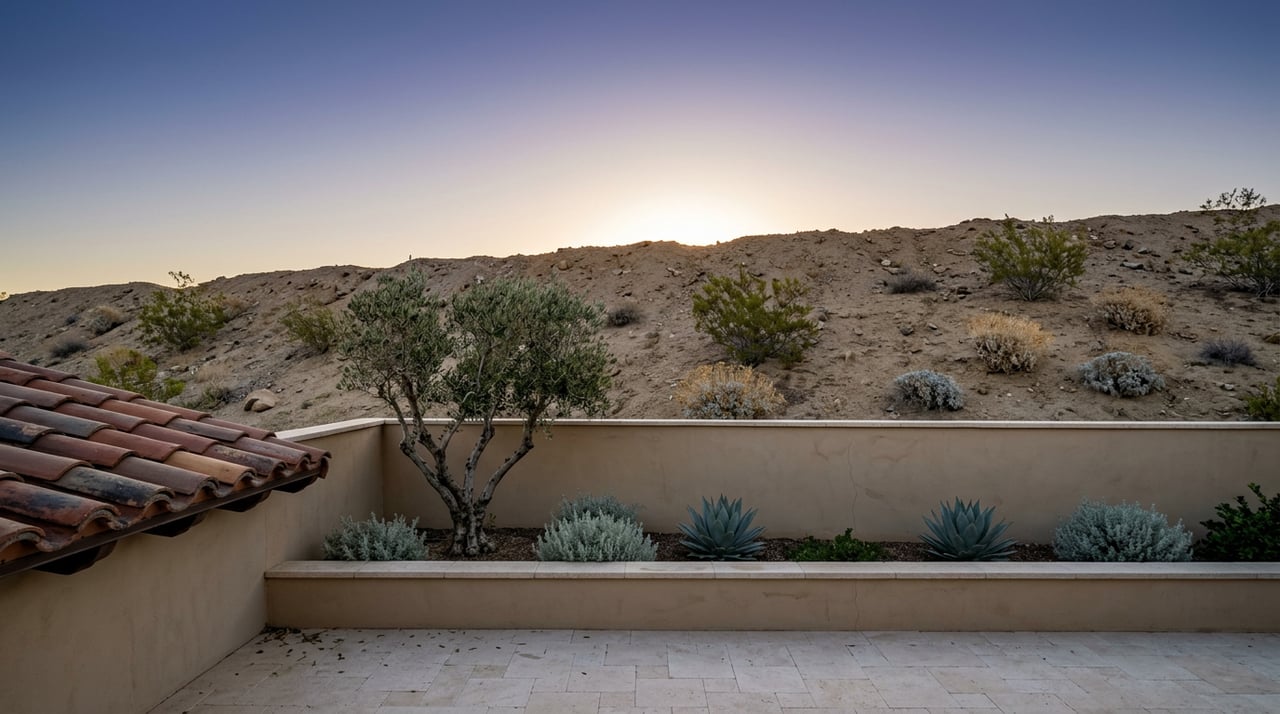
This is the part of living inside a gated community wrapped around a working desert range that doesn't show up in a welcome packet. Ascaya's homesites were carved into the McCullough Mountain Range specifically to sit above the valley floor, at elevations that climb toward roughly 3,000 feet. That number sounds like a marketing detail about views. It's actually the reason the wild sheep sharing this ridge with residents run on a slightly different clock than the ones living lower down.
Desert bighorn sheep spend summer glued to water. The Nevada Department of Wildlife notes that in the warmer months, sheep graze on mountain slopes and stay close to whatever water source is available, since ewes and lambs need to drink almost daily once temperatures climb. That's the behavior most Ascaya residents have been watching for the past few months: small, stationary groups, active early and late, largely invisible through the hottest stretch of the afternoon.
That stillness is seasonal, not permanent. According to the National Park Service, ewes come into estrus, the period when they can conceive, in July at lower desert elevations and not until August at higher ones. Ascaya's homesites sit high enough in the McCullough Range that the herd here runs closer to the August end of that window. Once estrus begins, rams start actively tracking and testing receptive ewes, which means the sheep stop conserving energy near water and start covering ground. The quiet, watchful pattern residents have gotten used to since spring is the calm before a genuinely different few months on the ridge.
Wildlife sources don't agree on an exact calendar for this. Nevada Department of Wildlife describes the rut broadly as a fall event, while other regional wildlife references put the breeding window as early as July through September. The disagreement matters less than the mechanism behind it: at Ascaya's elevation, the shift starts now, and it's driven by something as simple as when the ewes' hormones change relative to how high up the mountain they live.
Ascaya's developers didn't add bighorn sheep imagery to the community's two-acre Family Park as decorative flourish. When ground broke on the park, the design brief specifically called for sculptures modeled on "the resident sheep that roam Ascaya's ridgelines," placed alongside a Gila monster climbing structure, splash pad, and putting green. That detail is worth sitting with. The people who designed a family gathering space inside a guard-gated luxury community chose to permanently reference an animal that most residents only encounter as a fleeting shape on a distant slope, because the sheep aren't a backdrop here. They're a fixture, closely enough observed that someone thought to cast them in a park where kids play.
That same intentional attention shows up in how Ascaya's trail network was built. The paths that begin at the Clubhouse split almost immediately, sending walkers and riders toward two different overlooks rather than one shared loop. Practically, that split does two things worth knowing if you're trying to catch a sighting over the next few weeks:
Neither path guarantees a sighting. But knowing which one tracks closer to bighorn habitat, and why, turns an aimless walk into a better-informed one.
The clearest evidence that this seasonal shift plays out inside the gates, not just somewhere out in Sloan Canyon, comes from an archived photograph in the University of Nevada, Las Vegas Special Collections. Dated November 25, 2017, it documents desert bighorn sheep running across a homesite on Soaring Rock Court, one of Ascaya's own streets, with the caption noting the sheep on a "luxury home lot" inside the development. Late November sits squarely inside the broader rut window, when rams are actively moving between bands of ewes rather than staying put near a single water source. What that photograph captured wasn't a stray animal wandering off course. It was rutting-season movement, recorded on a residential street, because Ascaya's homesites back directly onto the same terrain the herd has always used.
That's the throughline. The stillness of August gives way to the ram movement of estrus, which by fall produces exactly the kind of encounter that photograph shows: sheep crossing developed ground because the terrain doesn't stop being their range just because a house sits on part of it. Ascaya's press materials describe the community as adjacent to the Sloan Canyon National Conservation Area, a roughly 48,000-acre stretch of protected desert that's also home to more than 300 documented rock art panels. The sheep don't recognize the boundary between the conservation area and the gated community. Neither does the seasonal biology driving their movement.
Once the rut is underway, expect the sightings to look less like a single sheep grazing quietly and more like small, active groups moving with more purpose across longer stretches of ridge. Rams will spend more time testing and following ewes rather than resting near water, which means more daylight movement, not less. That activity generally continues into early winter, after which the pattern flips again. The Nevada Department of Wildlife notes that in colder months, sheep move down toward lower elevations, and that ewe bands can consolidate into much larger winter groups, sometimes as large as 100 animals. Ascaya's higher perch means residents may see that seasonal descent play out more visibly than in lower-lying Henderson communities, simply because there's more vertical terrain between the ridge and the valley floor to cross.
None of this requires a hike to Sloan Canyon's official trailheads to observe. It happens on the same ridge visible from Ascaya's own community trails and, based on at least one documented case, on the streets themselves. The Family Park's sculptures will still be standing there through all of it, a small, permanent nod to an animal whose calendar runs a little differently up here than it does anywhere else in the valley.
If you're already living behind Ascaya's gates, none of this changes anything about your address. It just means the next few months on the ridge are worth paying closer attention to. For anyone curious about what else makes this particular stretch of the McCullough Range different from the rest of Henderson's guard-gated communities, from elevation and microclimate to the way the homesites were laid out around the terrain rather than over it, Prescindia Misch keeps a closer eye on Ascaya than most. If a conversation about the community, its trails, or its market ever makes sense, reach out to request a private consultation.
Stay up to date on the latest real estate trends.